Category Vision in skincare

The Challenge
A competitor was in the driving seat, acting as category thought leader, providing the UK’s #1 retailer with a category vision, determining which brands to include and where to place them. Eucerin found itself on the back foot and less favourably located within the newly re-framed category of “expert skincare”. It was losing share, struggling to remain visible on shelf and to engage consumers.
The Approach
This project required 3 outcomes:
- Regain the initiative with the retailer as the go-to source of category thought leadership, definition and design. To achieve this our insight needed to be better than the competitor’s study, supported by robust objective evidence, bringing the voice of the shopper to life to tell their story.
- Understand in more depth skincare shoppers’ usage, needs and attitudes, optimising the range so that consumers can make good brand and product choices within the expert skincare space more easily.
- Eucerin needed to modernise and refine its own brand messaging, in order to engage younger female consumers and change negative perceptions about the brand to strengthen its position in the newly defined category.
The Solution
Step 1. Quantitative study to:
- understand, size and segment the market based on consumers’ self assessed skincare needs (dry, normal, atopic etc.)
- evaluate the role that each brand plays based on these segments and needs, and in each product format (e.g. moisturiser, cleanser)
- map brands within the expert skincare category based on perceived brand characteristics
- measure NPS, understand category and brand entry points, sources of influence and touchpoints along the path to purchase.
Step 2. Eye tracking in store to:
- understand how shoppers navigate the expert skincare category intuitively (System 1)
- identify the triggers and barriers to successfully locating a known product or choosing a new brand and product to suit their needs
- observe the role that point of sale signage plays and which display, packaging and pack information shoppers pay attention to
Step 3. Store skincare advisor interviews to:
- understand types of skincare concerns which people find most difficult to shop for in store and why
- capture the spontaneous language used by consumers to describe their skin type or concern
- and understand the level of knowledge consumers have about their skin and about skincare
Step 4. Co-creative workshops to:
- connect consumers, technicians, designers and the brand team and co-develop a definition of core brand attributes which broaden the brand’s appeal beyond its base
- develop the most effective portrayal, tone of voice, visualisation, model representation and media placement which articulates the brand story
The Result – Eucerin in colour
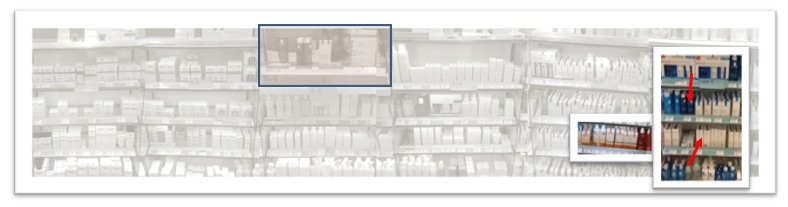
Our eye tracking study revealed that, because all the brands placed within the competitor’s vision of an expert skincare category had predominantly white packaging, the new layout had become an impenetrable “wall of white”, making it uninspiring and too difficult to shop. Shopper after shopper glided through the section without attending to any of the products on shelf, even though they were the right target audience.
Eucerin has a strong following and reputation but decided to show leadership in breaking down the “wall of white” barrier. Immediately, it invested in point of sale material to better demarcate the brand and its product ranges by colour code, and changed the planogram to vertically organise skincare so that it was not defined by a single needs-based range at eye level. It did, however, place its more specialist beacon products which have a instantly recognisable and bold colour palette, on the bottom shelf.
Eucerin redesigned its packaging to accentuate with “pops of colour” each of the skin type ranges, to more definitively segment the fixture, making it easier to navigate. It simplified language and changed the hierarchy of information communicated on front of pack, to highlight each product’s primary benefit.
Knowing that Eucerin needed to broaden its appeal and consumer perception of the brand, it increased its marketing content for “non problematic” skin, amplifying the beauty outcomes and sensorial experience of using the product.
The wall of white…